Why Making Mistakes Is Part of Becoming a Better Artist
If there's one thing I wish every artist truly believed, it's this:
Everything is fixable.
So many painters freeze before they even begin because they're worried about making a mistake. They carefully place every brushstroke, afraid that one wrong line or color choice will ruin the entire painting.
But that's not how painting works.
The truth is, making mistakes isn't just a normal part of painting. It's an essential part of learning, experimenting, and developing confidence as an artist.
And one of the most freeing things you can learn is that a painting doesn't have to go perfectly to turn out beautifully.
The Fear of Making Mistakes Can Hold You Back
When you're first learning to paint, it's easy to believe that experienced artists know exactly what they're doing from the moment their brush touches the canvas.
You might imagine that every color is carefully planned, every shape is placed correctly, and every brushstroke moves the painting closer to completion.
But that's rarely how the creative process actually unfolds.
Even after years of painting, I regularly change my mind, adjust compositions, repaint areas, and make decisions that don't work the way I originally imagined.
And that's completely normal.
The difference between a beginner and an experienced artist isn't that one never makes mistakes.
It's that the experienced artist doesn't panic when they do.
Instead of assuming the painting is ruined, they simply ask:
What needs to change?
And then they change it.
Developing that mindset is one of the most valuable things you can do for your growth as an artist.
Every Finished Painting Starts With Imperfect Brushstrokes
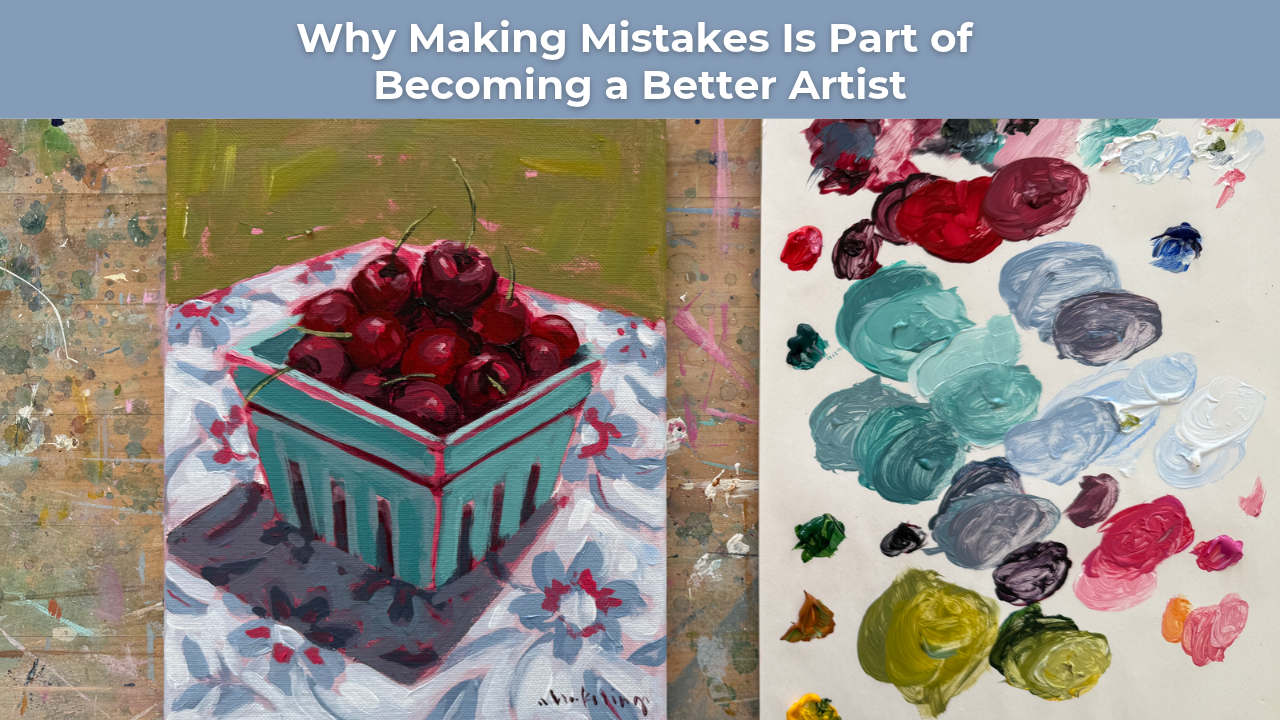
While filming my Market Cherries tutorial for Studio B Art Club, I made several adjustments throughout the painting process.
I changed lines, shifted elements of the composition, and painted over areas that weren't working.
None of those changes meant I had failed.
They were simply part of developing the painting.
In the early stages, the painting looked nothing like the finished piece.
The shapes were loose, the colors were still developing, and there were areas that needed to be completely reworked.
But each layer gave me more information about what the painting needed next.
That's something I want every artist to understand.
Your first brushstrokes don't have to be perfect. They just have to give you somewhere to begin.
A painting is built through a series of decisions, adjustments, and discoveries.
Sometimes those decisions work beautifully the first time.
Other times, you have to try something, evaluate the result, and make a change.
Both are equally valuable parts of the creative process.
Why Acrylic Paint Is So Forgiving
One of the reasons I love teaching acrylic painting is how much freedom the medium gives us to experiment.
Acrylic paint dries relatively quickly, which means you can often return to an area and make adjustments without waiting very long.
If something feels off, you have options.
You can paint over it.
Shift it.
Move it.
Adjust the color.
Simplify the shape.
Or start building another layer.
Every layer gives you another opportunity to improve your painting.
This is especially helpful when you're learning because it removes some of the pressure to make every decision correctly the first time.
Of course, some adjustments are easier than others, and occasionally you'll need to let a layer dry before making a change.
But in most cases, a brushstroke that doesn't work isn't the end of your painting.
It's simply information you can use to make your next decision.
How to Fix a Painting That Isn't Working
The next time you feel like you've made a mistake, resist the urge to immediately abandon your painting.
Instead, take a moment to evaluate what's actually bothering you.
Here are a few things I encourage my Art Club members to practice.
1. Step Back and Look at the Entire Painting
When you're working close to the canvas, small imperfections can feel much more significant than they actually are.
Step back and look at the painting as a whole.
Does the problem still stand out?
Sometimes an area that feels wrong up close works perfectly well within the overall composition.
You may discover that nothing needs to change at all.
2. Identify What Isn't Working
Rather than telling yourself that the entire painting looks terrible, try identifying the specific problem.
Is a shape too large?
Does a color feel too bright?
Is the composition unbalanced?
Does an area need more contrast?
When you can identify what's bothering you, the solution becomes much easier to find.
3. Make One Adjustment at a Time
You don't necessarily need to repaint an entire section.
Sometimes a small change can make a big difference.
Try adjusting a color, softening an edge, simplifying a shape, or adding a highlight.
Then step back and evaluate the result before making another change.
4. Don't Be Afraid to Paint Over Something
This is one of the most freeing lessons you can learn when working with acrylics.
Just because you've spent time painting an area doesn't mean you have to keep it.
If something isn't serving the composition, you have permission to change it.
Sometimes painting over an area is exactly what allows the rest of the painting to come together.
5. Remember That the Painting Is Still in Progress
One of the biggest mistakes artists make is judging an unfinished painting as though it should already look complete.
There will almost always be awkward stages throughout the painting process.
The colors may not feel balanced yet.
The shapes might look strange.
The composition may need adjusting.
That doesn't mean the painting is ruined.
It means you're still working on it.
Confidence Comes From Learning to Work Through Mistakes
I think we sometimes misunderstand what it means to become a confident artist.
We imagine confidence comes from reaching a point where we rarely make mistakes.
But I believe the opposite is true.
Confidence comes from knowing that even when something goes wrong, you have the ability to work through it.
You learn to trust yourself because you've experienced the process of making adjustments and watching a painting improve.
You become more willing to experiment.
You make bolder decisions.
You stop worrying quite so much about whether every brushstroke is correct.
And ironically, once you stop trying to create the perfect painting, your work often becomes much stronger.
You loosen up, take creative risks, and begin enjoying the process instead of fearing it.
That's when some of the most exciting artistic discoveries happen.
You're Always One Layer Closer
The goal isn't to avoid mistakes.
The goal is to become confident enough to work through them.
So the next time a brushstroke doesn't go where you intended, a color doesn't look quite right, or a section of your painting feels completely wrong, don't assume you've ruined it.
Take a moment.
Look at what you've created.
Ask yourself what needs to change.
And keep painting.
Because every adjustment teaches you something, and every layer brings you closer to understanding what your painting needs.
You're simply one layer closer to the version that's meant to be there.
Build Your Painting Confidence in Studio B Art Club
One of the things I love most about Studio B Art Club is watching members become more confident with every tutorial.
As you paint, you begin to realize that mistakes aren't failures. They're simply part of the creative process.
Inside Art Club, I walk you through my approach to acrylic painting, from simplifying shapes and choosing colors to building layers and making adjustments along the way.
My Market Cherries tutorial is a wonderful example of how a painting develops through imperfect brushstrokes, creative decisions, and plenty of adjustments.
With a growing library of step-by-step acrylic painting lessons and a supportive community of artists, Studio B Art Club is designed to help you build the skills and confidence to approach your next painting without fear.
Want More Weekly Art Tips?
If you found this helpful, you’ll love our exclusive weekly art tips delivered straight to your inbox! Sign up below to get insights, painting techniques, and creative inspiration—plus first access to exciting opportunities inside Studio B.
We hate SPAM. We will never sell your information, for any reason.